The Dosa Test & The $26 Billion Gamble: 4 Surprising Economic Lessons from Raghuram Rajan
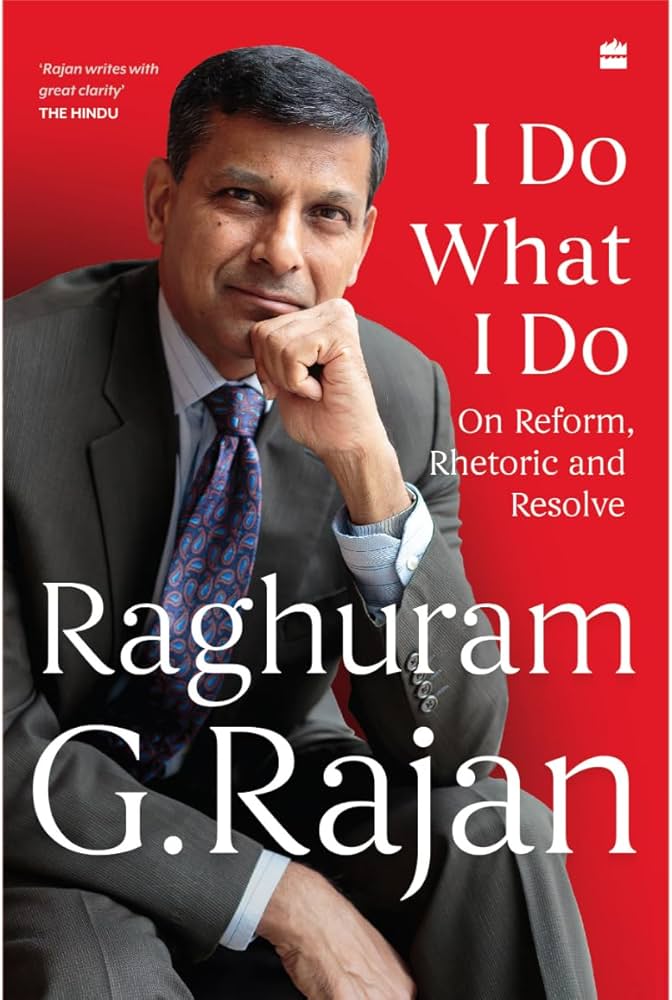
Raghuram Rajan earned a reputation as a “rock star” central banker—an image he tried to downplay—a candid and often unconventional thinker who departed from the typical bureaucratic mold. His book, “I Do What I Do,” compiles the speeches from his tenure, offering insights that go far beyond monetary policy to reveal surprising truths about India’s economy, its challenges, and its path forward. But his goal wasn’t just to set the record straight; he hoped to “give the youth of the country a feel for the excitement of working at the central bank” and attract a few into the vital fields of economics and finance. This article distills four of the most impactful and counter-intuitive lessons from his time at the helm of the Reserve Bank of India (RBI).
The ‘Dosa Test’ — How Lower Interest Can Make You Richer
A common complaint Rajan received from retirees was that they were earning less on their deposits (e.g., 8%) than they used to (e.g., 10%). To address this, he gave way to his “inner teacher” and introduced a simple concept he called “Dosanomics” to explain the crucial difference between nominal and real interest rates.He argued that if inflation falls faster than the interest rate on a deposit, the saver’s actual purchasing power increases. For example, if deposit rates fall from 10% to 8%, but inflation falls from 10% to 5.5% in the same period, a saver is actually better off. Their nominal return is lower, but the real return—the number of dosas their money can buy—is higher. This is a crucial, counter-intuitive point: true wealth is measured by what your money can buy, not by the nominal interest rate number on a bank statement.
The $26 Billion Gamble That Saved the Rupee
Shortly after taking office during the 2013 currency crisis, Rajan implemented a bold Foreign Currency Non-Resident (FCNR) deposit swap scheme. Initially, he was skeptical, dismissing it as “yet another clever ploy by bankers to get a subsidy from a country in trouble.”However, his perspective shifted after a stark “balance of risks” analysis. He weighed the potential costs of the scheme against the catastrophic damage of a continued rupee collapse. His calculation was visceral: if the rupee continued its free fall, “every one-rupee rise in the dollar-rupee rate would costs us Rs 40,000 crores more in import costs,” leading to a potential “loss of lakhs of crores to national income.” In contrast, the scheme’s maximum payout “would only be in the tens of thousands of crores.” He took the measured risk.The gamble was a resounding success, drawing in $26 billion, stabilizing the currency, and allowing the RBI to cover its forward swaps cheaply as confidence returned. It was a masterclass in high-stakes decision-making.Policy making invariably involves taking measured risks in the face of uncertainty, for one has neither a prior template nor the luxury of indecision.
Why India Has ‘Sick Companies But No Sick Promoters
‘Rajan identified a deep-seated problem in the Indian banking system: the skewed power dynamic between banks and large, influential borrowers. He observed that too many large promoters treated bank loans as junior to their own equity, insisting on a “divine right to stay in control” even when their ventures failed and they were unwilling to invest more of their own money.This led him to memorably state that India had “many sick companies but no ‘sick’ promoters.” He recounted a telling anecdote about a banker who, upon discovering a promoter had diverted funds, was incredibly angry. Yet, the most severe action the banker felt empowered to take was to cut the promoter’s credit line by a mere 20%. Rajan’s reaction: “I did not know whether to laugh or cry.” This story highlighted the systemic helplessness of lenders and revealed that a core challenge in the banking system wasn’t just bad loans, but a power imbalance that socialized losses while privatizing gains.
Why Tolerance and Respect Are Economic Necessities
In a departure from typical central banking topics, Rajan argued that social values like tolerance and respect are not just moral ideals but are essential for economic progress. In a speech at IIT Delhi, he explained that for a country at the “production possibility frontier,” sustained economic growth comes from innovation and new ideas, what economists call “total factor productivity growth.” Once catching up is no longer an option, he argued, “the only way to grow is to innovate and be even better than others in the world.”This “idea factory,” he argued, can only function in a competitive marketplace for ideas. Such a marketplace requires protecting the right to question, challenge, and debate authority and tradition in an environment of mutual respect. He warned that a quick resort to bans based on “hurt sentiment” could chill this essential debate, stifling the very innovation a country needs to advance.Far from being a foreign concept, he rooted this principle deep in India’s own history. He noted how “Raja Raja Chola, in building the magnificent Brihadeeswara Shaivite temple at Thanjavur, also incorporated sculptures of Vishnu as well as the meditating Buddha,” and how Emperor Akbar “was only following older traditions of our Hindu and Buddhist kings, who encouraged and protected the spirit of enquiry.” A vibrant, open society is a direct prerequisite for economic dynamism.The golden rule of conduct is mutual toleration, seeing that we will never all think alike and we shall always see Truth in fragments and from different points of vision.— Mahatma Gandhi
Conclusion: Beyond the Balance Sheet
Raghuram Rajan’s tenure was defined by thinking that transcended the typical duties of a central banker, tackling deep-rooted structural, social, and institutional challenges. From understanding real returns and taking calculated risks to challenging skewed power dynamics and fostering a culture of tolerance, his lessons offer a richer framework for understanding India’s economic path. They reveal that the country’s future depends on more than just numbers.As India strives for sustainable growth, is the biggest challenge found on the balance sheet, or in the mindsets that shape it?
The Money Men Who Broke the World: A Story of Gold, Ideology, and the Great Depression
The Gods of Gold
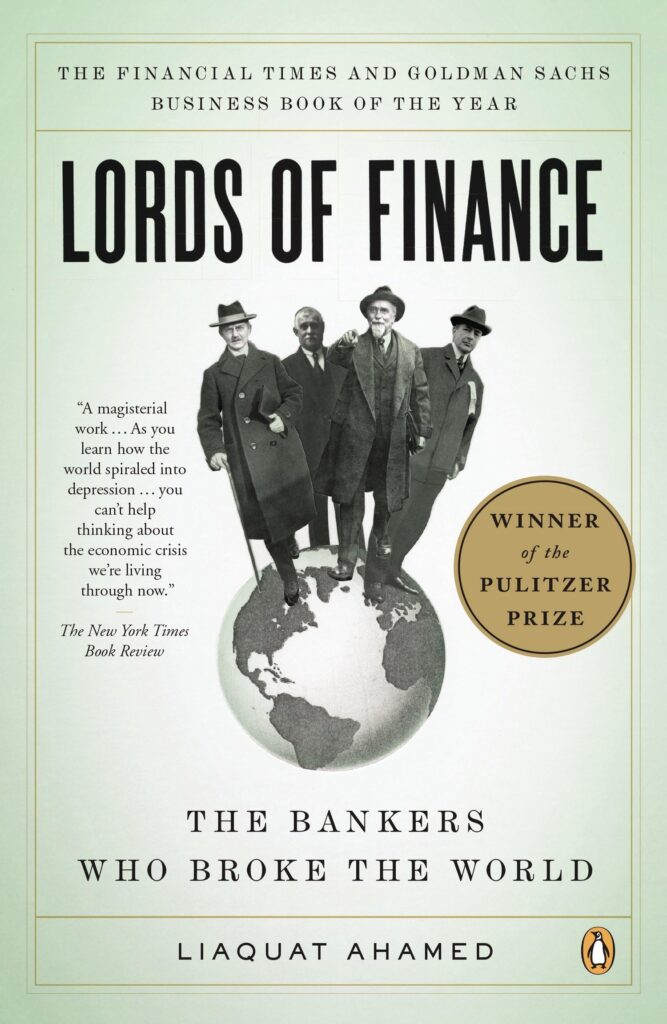
In the decade that followed the Great War, the world looked to a small group of men as its financial saviors. They were the heads of the world’s four most powerful central banks: Montagu Norman of the Bank of England, Benjamin Strong of the New York Federal Reserve, Hjalmar Schacht of the German Reichsbank, and Émile Moreau of the Banque de France. These were not mere bankers; in an age of uncertainty, they were regarded as “sages,” their every utterance capable of shaping the destiny of nations. Their shared mission was a noble one: to reconstruct the global financial system shattered by four years of brutal conflict. Yet, these “lords of finance,” entrusted with rebuilding the world, would instead preside over its greatest peacetime economic collapse: the Great Depression.
At the heart of their collective worldview was a single, powerful idea: the gold standard. To them, it was not just a policy but an article of faith. Montagu Norman, the most influential of the four, held a “rigid, almost theological belief” in the standard as the bedrock of global order and prosperity. This belief system was simple and, for a time, seemingly effective. Under the gold standard, a nation’s currency was directly tied to the amount of gold it held in its vaults. A government could only issue as much money as it could back with physical gold, a mechanism that was thought to instill discipline and prevent reckless spending. Before the war, this system appeared to work, facilitating international trade and fostering growth. It was the undisputed rulebook for the global economy, a promise of stability in a complex world.
The problem, however, was that the world these men sought to rebuild was fundamentally different from the one that had existed before 1914. Their unwavering adherence to this old rulebook would prove to be their fatal flaw. Their belief in the gold standard was so absolute that it blinded them to the new and dangerous realities of the post-war era. It transformed a tool of economic policy into an inflexible dogma. This intellectual rigidity, this faith-based approach to a world drowning in unprecedented problems, set the stage for the catastrophe to come. The very wisdom for which they were celebrated—their commitment to the “financial prudence” of the gold standard—was, in fact, their greatest blind spot, a recurring historical irony where the experts of one era become prisoners of its outdated ideas.
A World in Debt and a Disastrous Idea
The world that emerged from the rubble of World War I was a world drowning in debt. The warring nations had collectively borrowed an astonishing $200 billion, a sum equal to half of their total economic output. On top of this, the victorious Allies imposed a crippling reparations bill on a defeated Germany, demanding payments equivalent to roughly 100 percent of its entire pre-war economy. Faced with this impossible burden, Germany’s only option was to print money. The result was a social and economic cataclysm. By 1923, German hyperinflation had spiraled out of control; prices were doubling every few days, and the German mark became worthless. The life savings of the entire middle class were wiped out, destroying the social fabric of the nation and planting seeds of resentment that would bear bitter fruit a decade later.
Horrified by this chaos, the central bankers concluded that the only path back to stability was a swift return to the gold standard. But applying this rigid rulebook to a broken world was like forcing a splint onto a compound fracture. To rejoin the standard, nations faced two painful choices: deflation, which meant shrinking the money supply and causing mass unemployment, or devaluation, which meant officially reducing the currency’s value against gold. Britain, under Chancellor of the Exchequer Winston Churchill, chose the path of deflation, fixing the pound to gold at its high, pre-war value. The decision was disastrous. It made British goods too expensive on the world market, crippling exports and condemning the nation to a decade of high interest rates and unemployment.
France, in contrast, made a shrewder choice. It chose devaluation, setting the franc at a relatively low rate against gold. This made French products cheap and competitive, fueling an economic boom and causing gold to flood into its vaults. The consequences of these divergent paths revealed the fatal flaw in the revived system. The gold standard, once a facilitator of shared growth, had become a brutal, “zero-sum game”. France’s success came at the direct expense of its neighbors; its devaluation effectively “exported unemployment to Britain and Germany”. Rather than fostering cooperation, the system bred hostility and economic warfare. The apparent “umbrella of stability,” as Liaquat Ahamed argues, had become a “straitjacket,” choking the life out of weaker economies for the benefit of the strong. This dynamic had profound political consequences. The relentless economic pressure placed on Germany, first by reparations and then by the punishing logic of the gold standard, created a fertile ground for extremism. The decision to enforce massive debts, which seemed “financially prudent” to the bankers in London, Paris, and New York, proved to be “politically very dumb,” paving the way for the rise of Adolf Hitler.
The Great Crash and the Golden Anchor
By the late 1920s, even the “lords of finance” could see that their reconstructed system was dangerously unstable. They fretted over an “overheating US stock market,” excessive German borrowing, and a deepening recession in Britain. In an attempt to manage the growing bubble in America, Benjamin Strong’s New York Fed made a fateful move. In 1928, it raised its interest rate to 5 percent. This single decision acted like a powerful global magnet, pulling the world’s limited supply of gold towards the United States. To prevent their own gold reserves from hemorrhaging across the Atlantic, other nations were forced to follow suit. Britain raised its rates, further dampening demand and creating more unemployment. Germany, already in recession, was compelled to raise its rates to a crippling 7.5 percent. The gold standard acted as a perfect transmission mechanism for this economic poison, forcing the entire world to import America’s monetary policy, regardless of their own desperate local conditions. These rate hikes choked off credit and pushed Europe into a downturn well before the American market even crashed.
Meanwhile, the Fed’s move failed to achieve its domestic goal. The US stock market, detached from any underlying value, continued its frenzied ascent, nearly doubling in just 15 months through 1928 and 1929. When the inevitable crash came in the autumn of 1929, the market’s value was nearly cut in half. An initial, forceful response from the Fed and a group of private banks prevented a total collapse, but this intervention was eased too soon. A second, more devastating lurch downwards began, this time pulling the real economy of jobs and production into the vortex.
It was at this moment that the gold standard revealed its truly “perverse effect”. In a global crisis, the rational response for any country is to stimulate its economy. But the rules of the gold standard demanded the exact opposite. As economies weakened, investors sought the safety of gold, causing it to flow out of struggling nations. To protect their dwindling reserves, central banks were forced to raise interest rates, making it even harder for businesses to borrow and invest. This locked them into a self-destructive, pro-cyclical trap, forcing them to bleed their own economies to save their currencies. Capital increasingly flowed away from the countries that needed it most, like Britain and Germany, and towards those that already had plenty, namely the United States and France. The system had become a “winner-takes-all” machine that punished the weak and rewarded the strong—the precise opposite of what was needed to fight a global depression. The gold standard was no longer an umbrella of stability; it was a golden anchor tied to a sinking world economy, pulling everyone down together.
Living in the “Dark Ages”
The year 1931 marked the point of no return, the moment when a severe global recession metastasized into The Great Depression. The currency crises and bank runs, all exacerbated by the rigid demands of the gold standard, kicked off a “vicious cycle of deflationary psychology”. This was more than just an economic downturn; it was a collapse of confidence in the future itself. When people expect prices to keep falling, they stop spending. Why buy something today if it will be cheaper tomorrow? When businesses expect profits to keep falling, they stop investing and lay off workers. This collective paralysis grinds the entire economy to a halt, and the expectation of decline becomes a devastating, self-fulfilling prophecy.
In the United States, the richest nation on earth, the statistics were apocalyptic. Between its peak in 1929 and its low in 1932, the stock market lost an astonishing 90 percent of its value. Industrial production was cut by a quarter, and private investment halved. Unemployment soared to 20 percent and kept climbing. Steel mills that were not shut down operated at just 12 percent of their capacity. Car plants went from making 20,000 vehicles a day to just two thousand. A quarter of all banks had gone under, and with property values plummeting, half of all American homeowners had defaulted on their mortgages. The human toll was staggering: “34 million men, women and children out of a total population of 120 million had no apparent source of income”.
The crisis was so profound, so utterly disorienting, that it felt like a civilizational collapse. When a journalist asked the great economist John Maynard Keynes if there had ever been anything like it in history, he gave a chilling reply: “Yes. It was called the Dark Ages, and it lasted four hundred years”. His comment captured the pervasive sense of hopelessness. The foundational promise of capitalism—that free markets, guided by rational principles like the gold standard, would self-regulate and lead to ever-greater prosperity—had been shattered. The system had not self-corrected; it had self-destructed. To many, it seemed that Karl Marx had been right all along in his prediction that capitalism would collapse under the weight of its own contradictions. This profound crisis of faith created an ideological vacuum, opening the door to radical alternatives that promised to solve capitalism’s apparent failure, from Franklin Roosevelt’s New Deal to the far more brutal solutions offered by fascism and communism.
The Man Who Threw Away the Rulebook
When Franklin D. Roosevelt assumed the presidency in early 1933, he inherited a nation on the brink of total collapse. The New York Times reported that the nation’s capital felt like “a beleaguered capital in wartime”. Twenty-eight states had already shut down their entire banking systems. Roosevelt understood that the old rules had failed and that only bold, decisive action could save the country. His response was swift, radical, and aimed directly at the twin hearts of the crisis: the collapse of the banking system and the suffocating grip of the gold standard.
His first act was to change the psychological narrative. The old story was one of helplessness, of human suffering as a necessary price for adhering to the abstract principle of “sound money.” FDR replaced it with a story of action. He declared a five-day, nationwide “bank holiday,” shutting down every bank in America to stop the panic. He then pushed the Emergency Banking Act through Congress, which allowed only solvent banks to reopen and, crucially, had the federal government guarantee their deposits. The effect was electric. This single move restored faith in the system almost overnight. Terrified citizens who had been hoarding cash under their mattresses began to put it back into the newly secured banks.
His next move was even more revolutionary. Against the advice of nearly every orthodox economist and banker, FDR broke the “golden chains.” He suspended all gold exports and effectively took the United States off the gold standard. He accepted legislation that gave him the power to issue $3 billion in new currency without any gold backing and to devalue the dollar by as much as 50 percent. Roosevelt correctly understood what the old guard had failed to see: the gold standard was not the cure; it was the disease. The orthodox view held that restoring the standard would bring back confidence and then prosperity. FDR flipped this logic on its head. He believed the key to recovery was getting prices to rise—that is, creating inflation—which was impossible under the gold standard’s rigid rules. His model was to first break from gold, then stimulate the economy, and only then would real prosperity return.
The results vindicated his radicalism. The stock market rebounded, and the economy began its long, slow climb out of the abyss. The historical record is unequivocal: “Breaking with the dead hand of the gold standard was the key to economic revival”. Countries that abandoned the standard—Britain in 1931, the US in 1933, and France in 1935—began to recover. Those that clung to it continued to suffer. FDR’s true genius was not just in changing the policy, but in changing the entire paradigm. He demonstrated that in a crisis, the government’s primary duty was to its citizens, not to an outdated economic theory.
Lessons from the Lords of Finance
The story of the “lords of finance” and their role in the Great Depression is more than a historical curiosity; it is a timeless cautionary tale. The central lesson, as Liaquat Ahamed’s work makes clear, is a powerful warning against placing “too much faith in individual bankers and their rigid adherence to outdated ideas”. The gold standard, once the most powerful symbol of the self-regulating market beloved by classical economists, was exposed as a “barbarous relic” and a “fetish” that, rather than leading to a promised land of peace and prosperity, brought the world to its knees. It demonstrated that what is presented as financial prudence can have catastrophic human consequences.
This history compels us to ask a critical question: What is today’s “gold standard”? What widely accepted economic belief, institution, or policy looks good on paper but may be acting as a financial “straitjacket” on the modern world? The provided analysis suggests the European single currency, the Euro, as a potential parallel. Like the gold standard, the Euro is a supranational system that removes a country’s ability to control its own currency and exchange rate. To remain in the system, member nations can be forced to adopt painful austerity measures—slashing spending and raising taxes during a recession—that are dictated by the rules of the union rather than by their own domestic needs. The brutal austerity imposed on countries like Greece in the 2010s echoes the way Britain and Germany were forced to sacrifice their economies in the 1920s to protect their currencies.
The enduring legacy of this story is the fundamental conflict between rigid international systems and the sovereign needs of individual nations. The gold standard demanded that Britain accept mass unemployment to defend the pound and that Germany suffer deflation to pay its debts. In both cases, the international rulebook required policies that were devastating at home. This highlights the ultimate moral dimension of economic policy. Decisions framed in the abstract language of financial stability and prudence are never merely technical; they have profound and immediate effects on the lives of millions. The enforcement of German reparations and the adherence to the gold standard were not just policy errors; they were moral failures that led to immense suffering, social collapse, and ultimately, political catastrophe. The final, powerful lesson from the age of the Lords of Finance is that any economic system that places abstract principles above human well-being is destined to fail.
I’m absolutely thrilled to finally launch my brand new blog, thinkeconomy!🥳 I’ll be diving deep into the exciting world of the Indian economy, exploring all the ups and downs. Also, I’ll be covering the global economic landscape, so we can stay informed on international matters.🌎 Get ready for daily articles packed with insights, analysis, and hopefully, some fun facts too. I hope this blog helps you all! 🙏 #IndianEconomy #WorldEconomy #EconomicsBlog #NewBeginnings